
How to Search Criminal Dockets
Begin with the free Washington Courts Case Search for District and municipal matters or the Odyssey Portal for Superior Court. Search with the full name shown on the charging document, or use the case number when known. The court level matters. A city misdemeanor may sit with Anacortes, Burlington, Mount Vernon, or Sedro-Woolley Municipal Court, while a county misdemeanor belongs to District Court.
Online data is an index, not the whole criminal file. Washington Courts warns that updates may lag clerk entry by about twenty-four hours and that results are not the official record. If the search fails, call or visit the court clerk. The Skagit County Clerk handles Superior criminal files; District Court administration and each municipal clerk handle their own cases.
- Select Superior, District, or the named municipal court.
- Enter the complete party name or case number and narrow the filing period.
- Match the court, case number, and charge before opening the result.
- Read the filing list, settings, plea, disposition, and sentence entries in order.
- Ask the correct clerk for the exact document or a certified copy when the index is not enough.
The official Superior Court Odyssey entry screen shows where a Skagit County felony search begins.
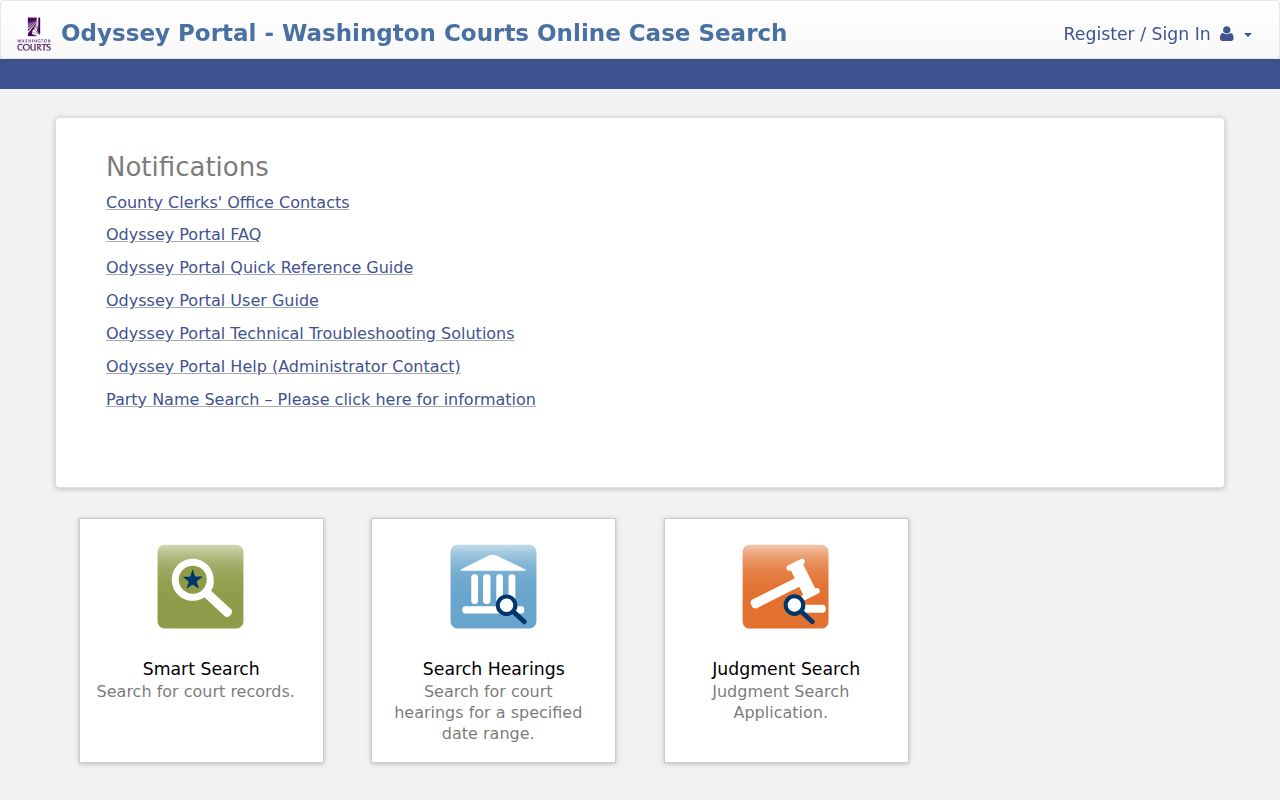
This portal image reinforces the court-level split: Odyssey is the Superior route, while District and municipal cases use limited-jurisdiction channels.
Skagit Felony and Misdemeanor Paths
Skagit County Superior Court hears felony prosecutions and keeps adult criminal records through the County Clerk. Skagit County District Court handles county misdemeanors and gross misdemeanors. City ordinance cases, city traffic crimes, and other city misdemeanors remain in the municipal court that received the charge. This split is the first issue to resolve before any docket search.
| Charge level | Court of record | Record custodian |
|---|---|---|
| Felony | Skagit County Superior Court | Skagit County Clerk |
| County misdemeanor | Skagit County District Court | District Court administration |
| City misdemeanor | Municipal court | That city's court clerk |
A limited-jurisdiction appeal may reach Superior Court, but the original municipal or District docket does not turn into a Superior criminal file merely because review follows.
What a Criminal Docket Shows
A docket is a dated event log. It can show the accusation, counsel appearances, warrants, bail activity, motions, hearing settings, continuances, plea, verdict, sentence, and later review. It does not prove every allegation. Read an entry in sequence and open the filed order when its exact terms matter.
| Case Number | A court identifier such as 99-9-99999-9; use every digit and dash. |
|---|---|
| Charge(s) | The filed offense and statute, which may later be amended. |
| Hearing Settings | Arraignment, omnibus, readiness, motion, trial, or sentencing dates. |
| Plea | The plea entered on the record, distinct from the original charge. |
| Disposition | Dismissal, conviction, acquittal, sentence, or other final action. |
Washington systems may also show a court code. SKG identifies Skagit District, while ANM and SWM identify Anacortes and Sedro-Woolley municipal courts. These codes name a court, not a result.
The re:SearchWA portal is the state-listed access point for Skagit County courts of limited jurisdiction.
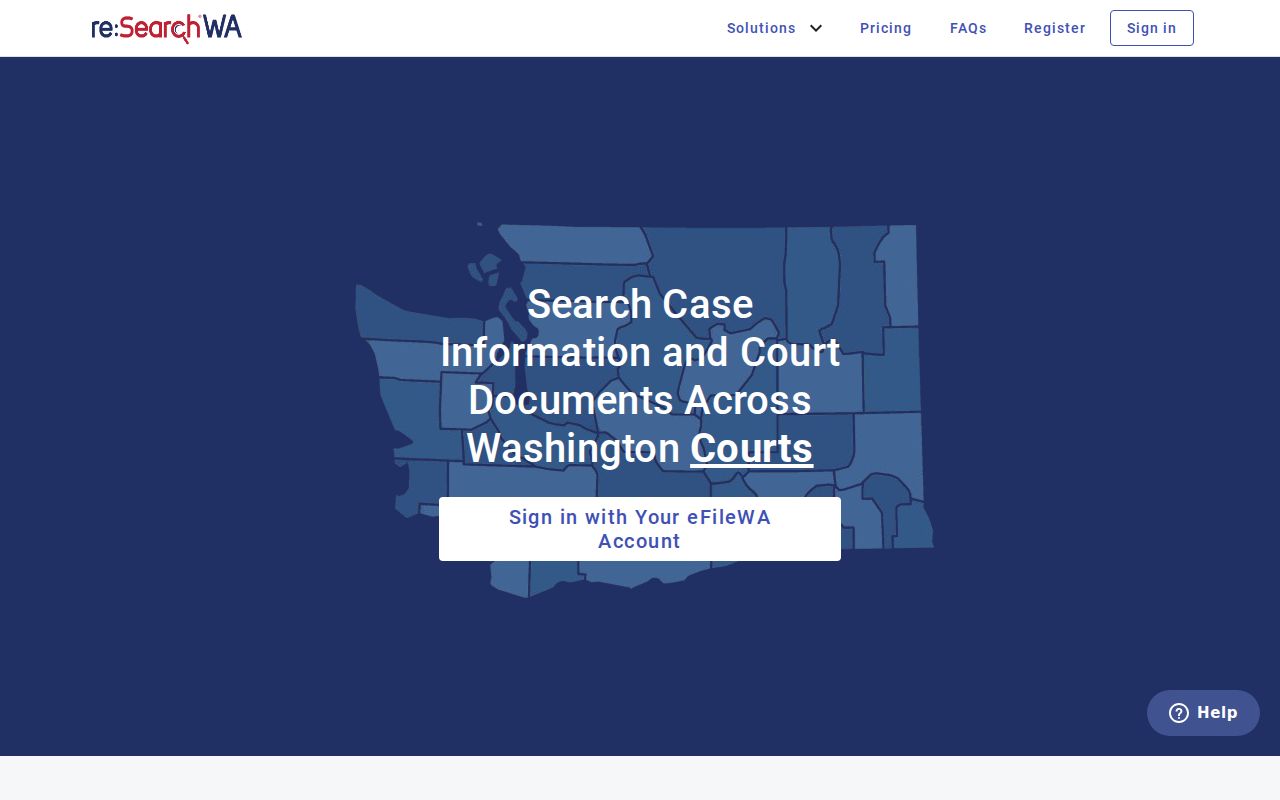
Its limited-jurisdiction focus helps separate a District or municipal criminal case from an adult felony file held in Superior Court.
Skagit Settings Are Not Convictions
An appearance on the Skagit Daily Court Docket means a matter is scheduled. It does not establish guilt or reveal the final ruling. The live table identifies the date, case name, court, courtroom, and time. Later entries may show a reset, a plea, a dismissal, a verdict, or a sentence.
Read the sequence: compare the charge entry with the latest disposition and the signed order. Never treat a calendar row as the outcome.
The same caution applies to bond entries. Release conditions, bond changes, forfeiture, and exoneration are procedural events. They do not replace the judgment or sentencing record.
Stages on a Criminal Docket
A prosecution usually begins with a filed complaint or information. Arraignment records the plea and future dates. Motions, discovery events, readiness hearings, and continuances follow as needed. A case can resolve by plea, dismissal, or trial. Judgment and sentence entries record the result, while later restitution, appeal, vacatur, or refund activity may extend the docket.
Docket flow: Charge Filed › Arraignment › Pretrial Settings › Plea or Trial › Disposition › Sentence
A continuance moves a setting; it does not erase the charge. A warrant entry may follow a missed required appearance. Confirm any current obligation with the court named on the notice because a web result can lag the clerk's live file.
Skagit Odyssey Criminal Documents
The County Clerk describes Odyssey as a free public case-data layer and a separate paid document-image service for eligible Superior Court files. Adult criminal documents are among the listed categories. The online subscription costs $200 per calendar year, prorated at $20 per month after January, while public kiosks in the clerk's lobby allow free viewing.
Free case data can tell a searcher that a motion, order, or judgment exists. It does not supply a certified copy. The Clerk's forms page directs requests for certified and non-certified Superior documents, and Digital Archives may be used for some non-certified material. State JIS and JIS-Link show case-management data but do not store the actual filed documents.
For a precise request, provide the case number, document title, and filing date. Ask the clerk about redactions, certification, page count, and payment before ordering.
The Skagit County Clerk's Odyssey information sets out the difference between public case data, subscription images, and lobby viewing.
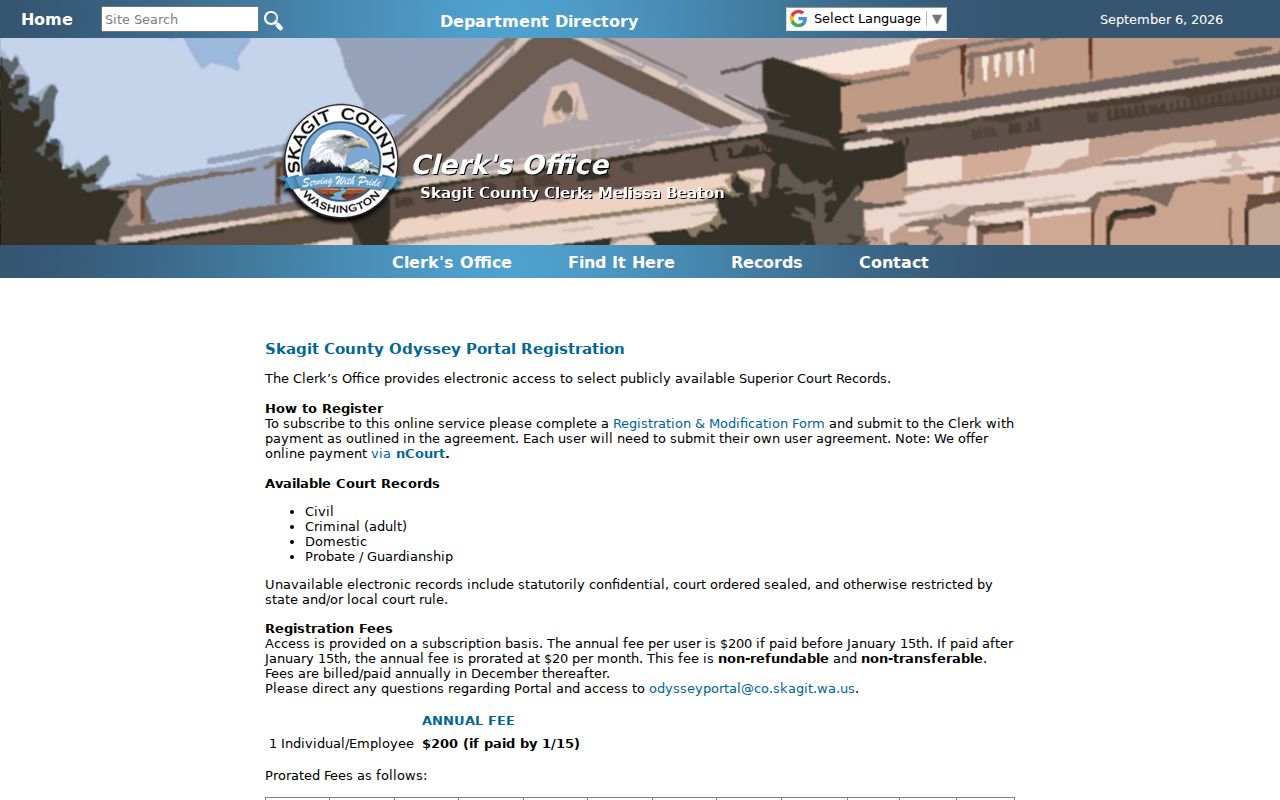
The access panel is useful when an index identifies a criminal filing but the reader still needs to view or order the document behind it.
Which Court Holds Criminal Dockets
Superior Court and the County Clerk are at 205 W. Kincaid Street in Mount Vernon. District Court sits separately at 600 S. Third Street in the Larry E. Moller Public Safety Building. Going to one counter does not make it the custodian for the other court's file. Municipal matters require the relevant city clerk.
The statewide name search is useful when the venue is unclear. A direct clerk request is better when a result is missing or a signed document is needed. District Court currently warns that staffing shortages may interrupt phone and voicemail service, so its published criminal email, lobby, and calendar channels are important fallbacks.
Juvenile offender matters use a separate Juvenile Court path and have tighter access rules. Do not assume a missing juvenile result is an error in the search portal.
Skagit Criminal Clerk Fallbacks
When a web result is incomplete, the next contact depends on the court. The Skagit County Clerk's search and request directions apply to Superior Court records. District criminal questions go to District Court administration at 360-416-1250 or dccriminal@co.skagit.wa.gov. A city case goes to that municipal clerk.
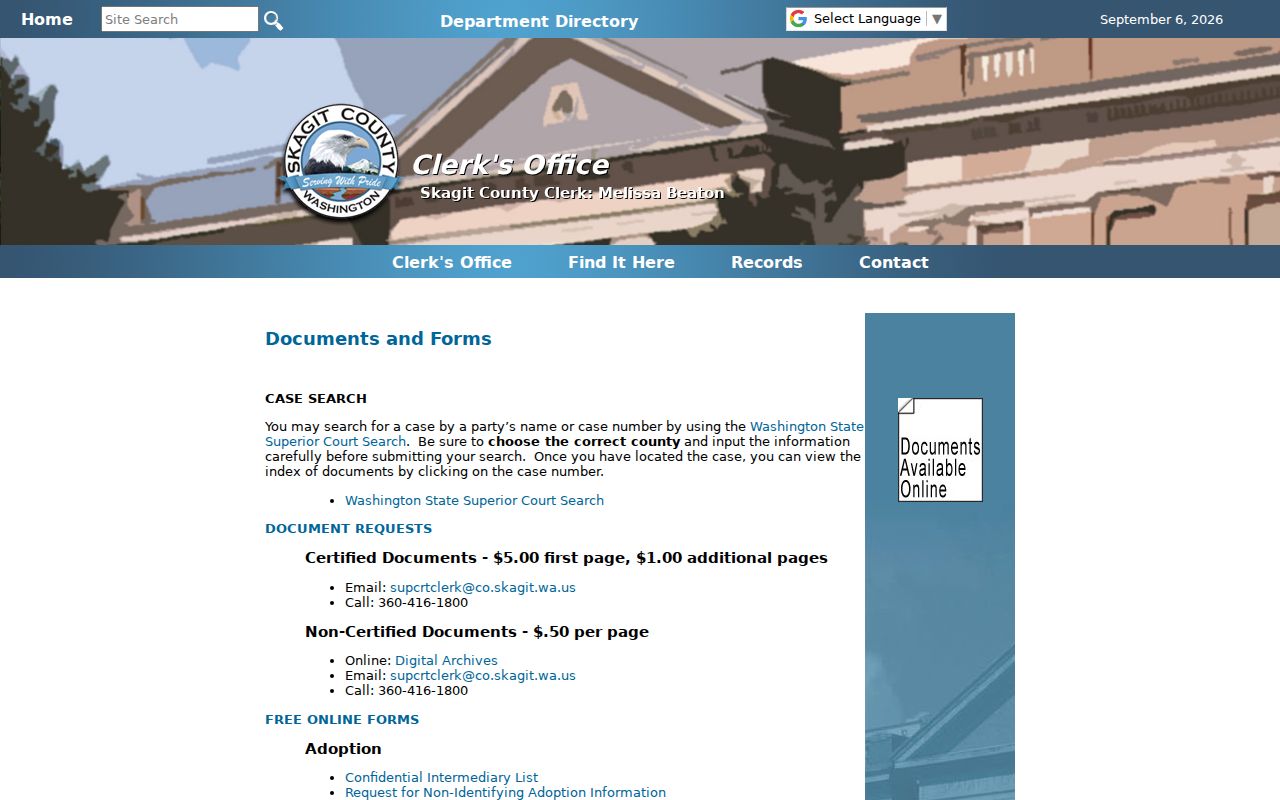
The clerk page shows why a case-data search and a document request are separate steps. Mail, the clerk counter, phone or email, and free lobby kiosks remain practical alternatives to an online image subscription.
Skagit Criminal Terms in Plain Language
Short docket labels can hide important differences. Use the filed document and current court notice when a label affects an appearance or deadline.
- Arraignment
- The hearing where the charge is stated and a plea is entered.
- Continuance
- An order moving a hearing or trial to a later date.
- Disposition
- The recorded outcome, such as dismissal, conviction, or acquittal.
- Vacatur
- A later court order setting aside a prior judgment under applicable law.
- Forfeiture
- A bond-related action that is not itself a finding of guilt.
Skagit District Court also publishes information about Blake-related refunds and vacatur. That post-judgment process is a useful reminder that a criminal docket may change long after the first disposition.
Public Access and Sealed Criminal Dockets
Washington General Rule 31 governs public access to court records. General Rule 15 covers destruction, sealing, and redaction. A court must authorize sealing, and the public index may show little or nothing for protected material. Juvenile records also follow state confidentiality and sealing statutes.
Key Rules:
General Rule 31 sets the public-access framework for court records.
General Rule 15 governs sealing, redaction, and destruction of court records.
RCW 13.50.260 addresses sealing of juvenile records.
The Washington Public Records Act applies to many agency records, but judicial case files follow the court rules. An administrative-record request under GR 31.1 is not a substitute for asking the clerk for a criminal case document. When access is limited, request the public portion and ask the clerk what order or procedure controls the rest.